What is Smart OPD and how does it improve healthcare services?

Understanding Smart OPD
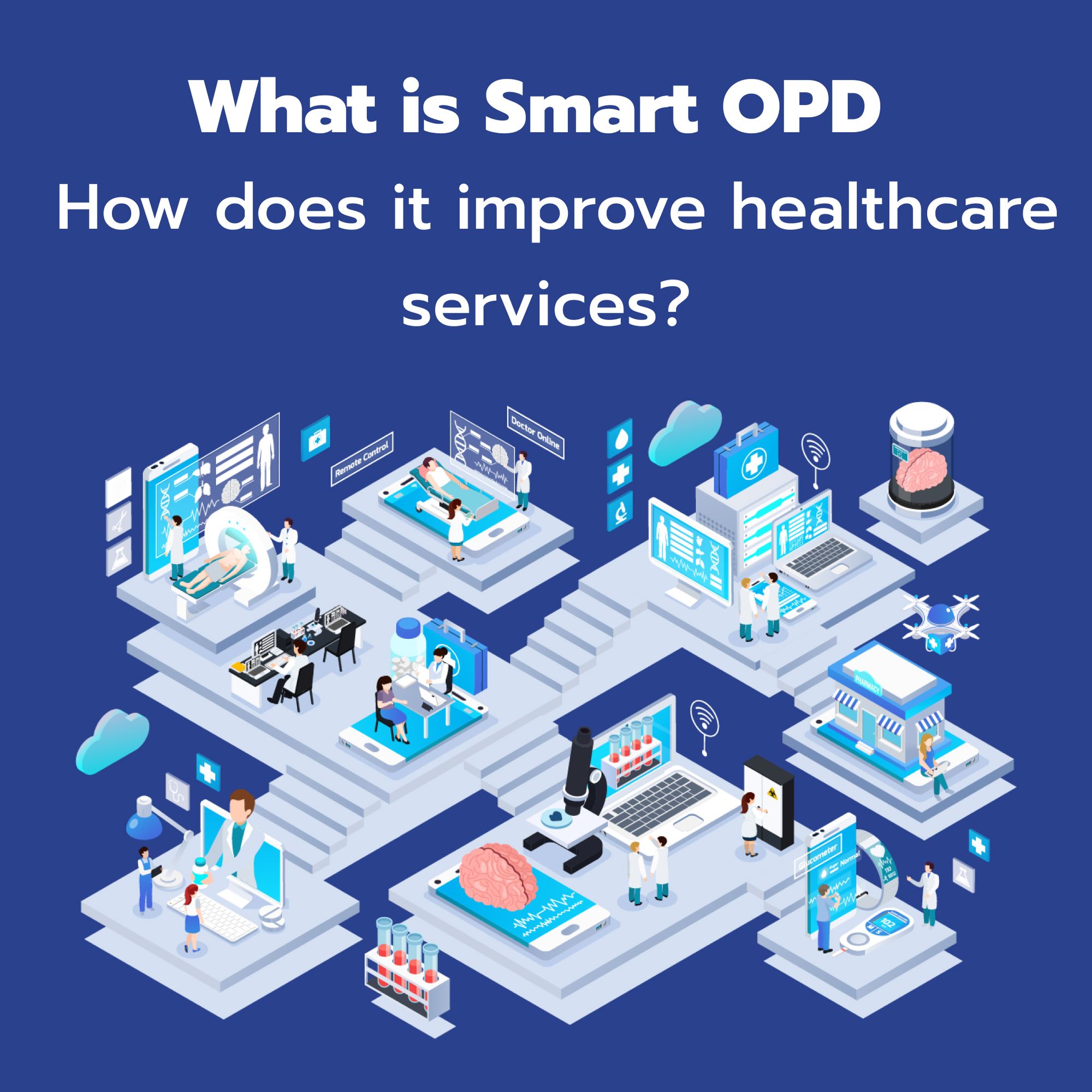
Smart OPD (Smart Outpatient Department) is an intelligent management system for outpatient departments that integrates digital technology, IoT (Internet of Things) devices, and artificial intelligence (AI). This system enhances patient services from the moment they prepare for their hospital visit, through consultations with doctors, and until they return home.
Why should hospitals adopt Smart OPD?
Transitioning to a Smart OPD is about creating a better experience for patients. It reduces errors in medical staff workflows and eliminates unnecessary tasks, allowing healthcare professionals to focus more on patient care. This results in improved service quality and efficiency. Additionally, it helps reduce operational costs, enhancing the hospital’s image and modernizing its services.
Technologies Enhancing the Development of Smart OPD
The transformation of the Outpatient Department (OPD) into a Smart OPD requires the integration of various technologies to enhance patient care, reduce waiting times, and improve convenience for both patients and medical personnel. Here are some of the key technologies that facilitate this transformation:
- Electronic Medical Records (EMR) or Electronic Health Records (EHR)
EMRs/EHRs are electronic systems that store patients’ medical histories. These records include all critical medical information, such as personal details, progress notes, treatment issues, medication usage, significant symptoms, and past medical history, under the care of healthcare providers.
Benefits of EMRs/EHRs:
• Facilitate seamless data sharing between departments or hospitals, reducing errors from manual record-keeping.
• Enable quick access to patient data, reducing reliance on paper documents, and allowing doctors to access records anytime, anywhere.
• Increase accuracy in medical record-keeping, minimizing treatment errors.
• Provide readily available medical data, reducing redundancy and delays, ensuring patients receive accurate information for better treatment decisions.
- Artificial Intelligence (AI) and Machine Learning (ML)
AI is increasingly utilized in healthcare for various applications in OPD:
• AI Chatbots: Answer general health queries, assist with appointments, and provide patients with preliminary information before their hospital visit.
• Symptom Screening and Triage: AI analyzes patient data and performs preliminary symptom screening before referring them to the appropriate department.
• Queue Management: AI helps manage patient flow and calculates waiting times for different departments.
• Medical Imaging: AI reads and interprets medical images (e.g., X-rays, MRIs).
• Diagnosis and Treatment Recommendations: AI provides suggestions for accurate and prompt medical decisions.
- Robotic Process Automation (RPA)
RPA automates repetitive and time-consuming tasks, improving overall efficiency and reducing staff workload. It minimizes errors in data handling. Common applications in OPD include:
• Verifying treatment eligibility and patient registration.
• Automating insurance claims and health document processing.
• Managing patient appointments and sending automated reminders.
• Real-time data analysis and reporting.
- Kiosks, Self-Service Devices, and Other Smart Devices
Self-service devices improve the patient experience by reducing wait times and relieving staff workloads. These devices connect to the hospital’s Health Information System (HIS) to automatically update patient data. Examples include:
• Self-Registration Kiosks: Allow patients to register, book appointments, select departments, and input preliminary medical information.
• Vital Sign Monitoring Devices: Devices for measuring blood pressure, height, weight, blood oxygen levels, and temperature, designed for patient self-use.
- Telemedicine and Health Applications
The World Health Organization (WHO) defines Telemedicine as the provision of healthcare services to distant populations using information and communication technologies. This facilitates diagnosis, treatment, prevention, and medical research, as well as continuous education for healthcare professionals.
Hospital-developed apps and Telemedicine services empower patients to manage healthcare services through their smartphones. These applications are beneficial in various ways:
• Before Hospital Visits: Patients can book or manage appointments and view diagnostic results.
• Post-Hospital Follow-Up: Patients can monitor their health status or receive remote monitoring from healthcare providers.
• Remote Consultations: Patients can consult doctors without visiting the hospital, reducing OPD congestion and enhancing healthcare accessibility for remote populations.
This technological integration supports the vision of modern, efficient, and patient-centered healthcare services.
Case Study: Using Technology to Enhance Healthcare Services
- AccentCare, a healthcare provider from the United States, implemented an RPA bot from AutomationEdge to automate patient appointment scheduling 24/7, replacing multiple manual processes previously handled by staff. This system significantly reduces human errors, cuts down on manual workload by up to 80%, and decreases the time required to manage appointment schedules in the EMR (Electronic Medical Records) system by 70%.
How the RPA Bot Works:
The RPA bot automates the following processes:
• Accessing patient appointment details.
• Logging into the Homecare Homebase (HCHB) system and retrieving the patient case ID.
• Verifying whether the appointment date falls within the insurance coverage period.
• Updating appointment details such as date and type of service.
• Checking appointment status and notifying users through the Skedulo program.

- University of Pittsburgh Medical Center (UPMC), USA, Implements Remote Patient Monitoring (RPM)
UPMC has adopted Remote Patient Monitoring (RPM) devices from Vivify Health to monitor patients remotely. This system has successfully reduced hospital readmission risks by 76% and maintained patient satisfaction scores above 90%. (Source: WBR Research)
How RPM Devices Work:
The RPM devices from Vivify Health are used alongside tablets to collect patients’ biometric data, such as weight, blood sugar levels, or blood pressure, depending on the patient’s specific health conditions. The system includes daily symptom screening questionnaires and alerts healthcare providers when a patient’s condition worsens, enabling timely intervention to prevent adverse events.
These devices are particularly effective in monitoring severe conditions such as heart failure, hypertension, chronic kidney disease, and chronic obstructive pulmonary disease (COPD). Additionally, patients can integrate their own devices with the system, providing a flexible and personalized monitoring solution.


- National Health Service (NHS), UK, Implements Self-Service Kiosks from Intouch with Health
The National Health Service (NHS) has introduced self-service kiosks from Intouch with Health to enhance patient convenience. These kiosks allow patients to self-check-in before receiving medical services. Patients can verify their pre-booked appointments or scan a barcode from their appointment slip. After checking in, the kiosk directs patients to the appropriate waiting area and updates the Flow Manager system for staff.
The kiosks are designed to be user-friendly and capable of handling large volumes of patients, reducing wait times and allowing staff to focus on more critical tasks.
Flow Manager System for Staff

On the staff side, the Flow Manager system provides a dashboard for managing patient flow. Staff can monitor each patient’s status, such as whether they have checked in, arrived late, or been called in for consultation. For patients requiring special assistance, such as those with visual impairments or those needing an interpreter, the system alerts staff to provide necessary support.
The Flow Manager system improves coordination between hospital departments, eliminates unnecessary steps, and enhances operational efficiency. This contributes to an improved patient experience.
Current Usage
• 85% of check-ins at NHS facilities are now completed via kiosks.
• The Flow Manager system manages 56% of outpatient services.
• The system is currently used in over 150 hospitals worldwide.
(Source: Intouch with Health – Patient Check-in, Intouch with Health – Flow Manager)

4.The Portsdown Group Practice, UK, Implements EK Health Kiosks
The Portsdown Group Practice in the UK has introduced EK Health Kiosks, self-screening health kiosks that connect to blood pressure monitors, height measurement devices, and weight scales. Patients can also select their department for examination. The kiosks offer anxiety assessments and health screenings for new patients. Health check results are automatically recorded in the patient management system.
Results
In the first three months of using the self-screening health kiosks:
• The practice saved £11,280 (approximately 500,000 THB) in costs.
• Medical staff saved an average of 2.5 minutes per appointment.
(Source: EK Interactive – GP Health Kiosks)

Digital Technology and AI in Thailand’s OPD Services
In Thailand, digital technologies and AI have also been utilized to enhance OPD services. Siriraj Hospital launched its Telemedicine service through the Siriraj Connects app and its Line Official Account (OA) in 2019 during the COVID-19 pandemic. This service allowed patients to consult doctors online and receive medications via mail. Initially, it was available only for patients with follow-up appointments.
Current Usage
Today, the service extends to both OPD and IPD patients, providing significant convenience and reducing unnecessary hospital visits. Patients can:
• View appointment details and confirm registration from home.
• Receive appointment reminders.
• Track queues for medical consultation, pharmacy, blood tests, and payment.
• Make payments via mobile.
• Access other hospital service information, such as doctors’ consultation schedules.
• Check healthcare coverage in advance, including Universal Coverage Scheme (30 Baht Scheme) and Social Security benefits.
The remote registration service now covers 13 clinics, serving around 80% of all patients visiting Siriraj Hospital. The platform currently has over 400,000 users on its Line OA.
(Source: Siriraj Hospital, True Blog)

Perceptra has developed Inspectra CXR, an artificial intelligence (AI) technology designed to assist doctors in screening patients with lung infections. This tool supports radiologists in reading chest X-rays by providing detailed analyses of abnormalities. It helps classify the severity of infections, enabling clear identification of patients who require urgent treatment.
Development and Accuracy
Inspectra CXR was developed using over 1.5 million chest X-ray images and took more than two years of research and development. It is capable of diagnosing common abnormalities in chest X-rays across eight conditions with an accuracy of over 94%, based on tests conducted on more than 100,000 chest X-rays from Thai patients. This technology has gained widespread acceptance from medical professionals both in Thailand and internationally.
Integration and Benefits
The system integrates seamlessly with hospital information systems (HIS), allowing doctors to use it conveniently without disrupting existing workflows. It reduces the time and workload for radiologists by up to 70% in interpreting chest X-rays.
Currently, Inspectra CXR is used in over 90 hospitals across Thailand. (Source: Perceptra )

Bangkok Hospital Implements Smart Registration System by Agnos Health
Bangkok Hospital has introduced the Smart Registration System, developed by Agnos Health, leveraging AI technology to streamline patient registration. The service is accessible through self-service kiosks or staff-operated tablets. The system employs advanced AI to facilitate multiple processes, including:
Key Features of Smart Registration:
1. Patient Identity Verification:
• Utilizes AI face recognition to match patients’ faces with their ID cards or passports.
• Complies with IAL 2.3 identity verification standards.
2. Clinic Recommendation:
• Integrates the AI Nurse, an AI-driven symptom analysis tool developed by Agnos, to take preliminary patient histories and recommend the most suitable department for their symptoms.
• Reduces errors in department referrals.
3. Automated Insurance and Benefit Verification:
• Uses API integration or Robotic Process Automation (RPA) to automatically verify insurance coverage.
• Speeds up the process, allowing patients to quickly know their insurance benefits.
4. E-Consent for PDPA Compliance:
• Collects patient consent electronically using OTP verification via SMS or email, minimizing unnecessary paper use.
5. E-Visit Slip:
• Provides patients with digital navigation slips.
• Allows them to track their service status through LINE or the hospital’s application.
Benefits:
The Smart Registration System reduces the patient registration process by up to 45% and cuts registration time by more than 60%, from 5-7 minutes to just 1-2.5 minutes.

The adoption of these technologies in healthcare systems enhances service agility, improves the quality of work for medical personnel, increases patient satisfaction, and optimizes hospital management. While this article focuses primarily on outpatient departments (OPD), there are other technologies that can be adapted to address various challenges within hospitals, depending on their specific contexts. Developing a hospital into a Smart OPD is a significant step towards a modern future, meeting the needs of patients in the digital age.